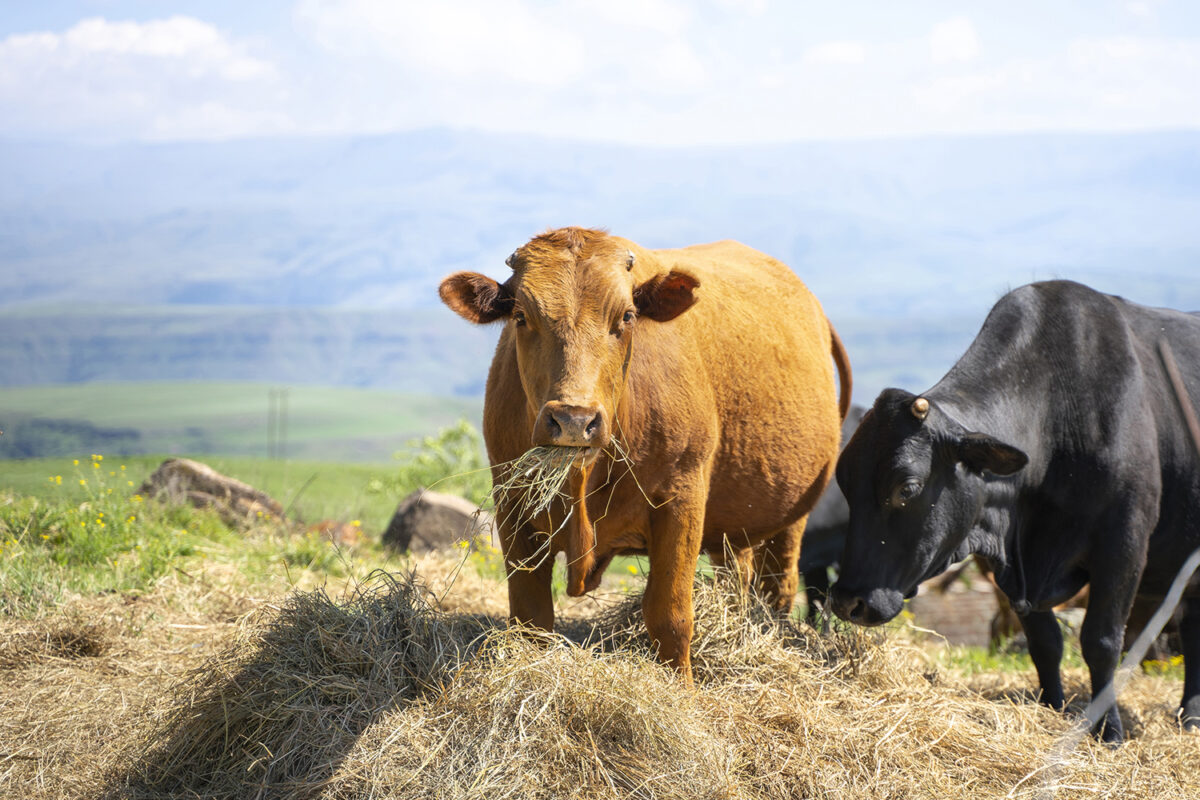
As spring approaches, cattle farmers face one of the most dangerous seasonal transitions on the farming calendar. Spring flush syndrome – comprising grass tetany and frothy bloat – is triggered by the sudden shift from dry winter rations to lush, fast-growing pasture. This article outlines the risks, clinical signs and evidence-based prevention strategies.
With Spring approaching in South Africa, cattle farmers face one of the most dangerous seasonal transitions on the farming calendar. ‘Spring flush syndrome’ is not a single disease. It refers to two common and deadly metabolic emergencies that affect cattle grazing on fast-growing, young spring grass: Grass tetany and frothy bloat. Both are triggered by the sudden dietary changes that happen when herds eat highly digestible, lush, new forage.1,2,3,4
After months on dry winter rations — balanced mixes of dry forage, grains, and co-products — cattle are turned out onto green pasture. This rapid shift from a controlled, dry diet to lush spring grass places enormous stress on the rumen and on the animal’s metabolic system. The new forage is characterised by three challenging properties: low dry matter (often <20%), excessively high protein coupled with moderate energy, and very low fibre content.1
Lush spring grass can frequently be <25% dry matter, meaning a lactating 600kg cow may need to consume up to 62.6kg of fresh grass daily just to meet energy requirements — more than the rumen can physically hold at roughly 45.4–56.7kg.1
The cow simply cannot eat enough to sustain herself. At the same time, the protein content of rapidly growing grass frequently exceeds the animal’s requirements while energy remains inadequate. When rumen microbes face excess protein without sufficient energy, deamination occurs: protein is broken down into ammonia, which crosses into the bloodstream, is converted to urea by the liver, and excreted in urine. This protein-energy imbalance is not merely an inefficiency — it is a direct precursor to both grass tetany and frothy bloat.1
Grass tetany: The silent killer
Grass tetany, or hypomagnesemia, occurs when the body’s absorption of dietary magnesium is insufficient to meet the demands of lactation (~120mg per kilogram of milk) and maintenance (3mg per kilogram of body weight). Unlike calcium, magnesium cannot be reabsorbed from bone reserves to compensate for a transient deficiency, making cattle entirely dependent on daily dietary intake.2
Spring pasture creates the perfect storm. Fast-growing grasses contain high nitrogen levels (ranging from 4.2% to 6.3%, equivalent to 26–39% crude protein), which leads to elevated ammonium ion concentrations in the rumen, raising ruminal pH and directly decreasing magnesium bioavailability.2
The high potassium content of lush spring forage further hinders magnesium absorption. Cattle on lush grass pastures are also more likely to develop metabolic alkalosis (urine pH >8.5), which reduces the supply of ionised calcium and magnesium, compounding the risk of both hypomagnesaemia and hypocalcaemia.2
The clinical signs are dramatic and often appear without warning. Affected cows exhibit hyperexcitability — sudden head-throwing, loud bellowing, and erratic galloping. Muscular spasms are common, and in severe cases, seizures occur. During seizures, cows may display paddling motions, chomping jaws, frothy salivation, and eyelid fluttering. In extreme situations, respiratory distress sets in, potentially leading to collapse and death. Clinical signs can cause death within four hours, and a rapid rise in body temperature may follow a tetanic event.2
Treatment must be immediate. Clinical cases require intravenous (IV) magnesium (2-4g), or subcutaneous injection of 200-400ml of 25% magnesium sulfate. A standard course involves slow IV injection of 400ml of 40% calcium borogluconate and 50ml of 25% magnesium sulfate, since hypocalcaemia frequently accompanies hypomagnesaemia. However, animals in coma typically fail treatment, and stimulation during treatment can trigger lethal seizures.2
Frothy bloat: The rumen under pressure
The conditions described in the studies — low fibre, high protein, and rapid passage rates in lush spring forage — are precisely the factors that predispose cattle to frothy bloat. When cattle graze immature, low-fibre pasture, the rumen cannot maintain normal motility and gas eructation. A stable foam forms that traps fermentation gases, leading to life-threatening rumen distension.
Meteer observed that the low fibre content of immature forages results in very high passage rates and unsatisfied cattle — cows appear hungry despite being knee-deep in green grass.1
The solution is straightforward: supplementing with palatable dry baled forage that is low or moderate in protein (not alfalfa hay) can help address both the dry matter deficit and the fibre shortage. Supplementing with grains — though not exceeding 0.5% of body weight — or grazing only the top third of the grass plant can also help restore balance.1
Management and prevention
Prevention of grass tetany centres on ensuring adequate magnesium intake before and during high-risk periods. Supplementation with high-magnesium mineral feed should begin at least 30 days before calving.2
Cows need ~113g of a mineral mixture containing 12% magnesium daily. Magnesium oxide (MgO) can be added to grains, though its bitter taste requires mixing with palatable ingredients such as molasses and concentrate.2
During dangerous periods, 60gr of magnesium oxide can be supplemented daily. Magnesium can also be delivered by spreading MgO powder (500g per cow) on hay or spraying a 2% magnesium sulfate solution on pasture every one- to two-weeks — though if rainfall >40–50mm within two- to three-days, the treatment must be repeated.2
Pasture management is equally critical. Fertilisation should follow soil testing, and excessive potassium fertiliser should be avoided, as high potassium in lush spring forage directly hinders magnesium absorption. Providing dry hay or limiting grazing time to two- to three-hours per day slows food passage through the digestive tract and promotes magnesium absorption.2
Energy supplementation during spring grazing can also help address the protein-energy imbalance. Research showed that supplementing grazing dairy cows with high moisture maize lowered milk and plasma urea concentrations by 0.72mmol/l and 0.76mmol/l respectively, compared to cracked wheat, indicating better nitrogen utilisation and a more balanced rumen environment.3
Pasture diversification also matters: Cows grazing legume and forb-based pastures showed lower beta-hydroxybutyric acid and improved antioxidant status compared to those on grass-only pasture, suggesting that diverse swards may help buffer the metabolic extremes of spring flush.4
Comprehensive training of farm workers to recognise early warning signs — changes in behaviour, appetite, or milk production — is essential for timely intervention. Regular blood and urine testing for magnesium and metabolic parameters can detect subclinical deficiency before it becomes a clinical emergency.2
Conclusion
Spring flush syndrome demands respect. The transition from dry winter feed to lush spring pasture is not a single event but a process requiring careful management. Supplementing with magnesium, providing dry fibre alongside pasture, avoiding excess potassium fertilisation, and considering energy supplementation and forage diversification are all evidence-based strategies that protect herds. With preparation and vigilance, South African cattle farmers can harness the nutritional benefits of spring growth without falling victim to its hidden dangers.
References
- Meteer WT. Mitigating the Challenges of Grazing Lush, Spring Forages. [Internet]. Available at: https://uknowledge.uky.edu/cgi/viewcontent.cgi?article=1147&context=ky_grazing
- Kang D, Lungu SE, Danso F, et al. Animal health and nutrition: metabolic disorders in cattle and improvement strategies. Front Vet Sci, 2025
- Merino VM, Leichtle L, Balocchi OA, et al. Metabolic and Productive Response and Grazing Behavior of Lactating Dairy Cows Supplemented with High Moisture Maize or Cracked Wheat Grazing at Two Herbage Allowances in Spring. Animals (Basel). 2021
- Ford HR, Busato S, Trevisi E, et al. Effects of Pasture Type on Metabolism, Liver and Kidney Function, Antioxidant Status, and Plant Secondary Compounds in Plasma of Grazing, Jersey Dairy Cattle During Mid-lactation. Front Anim Sci, 2021.