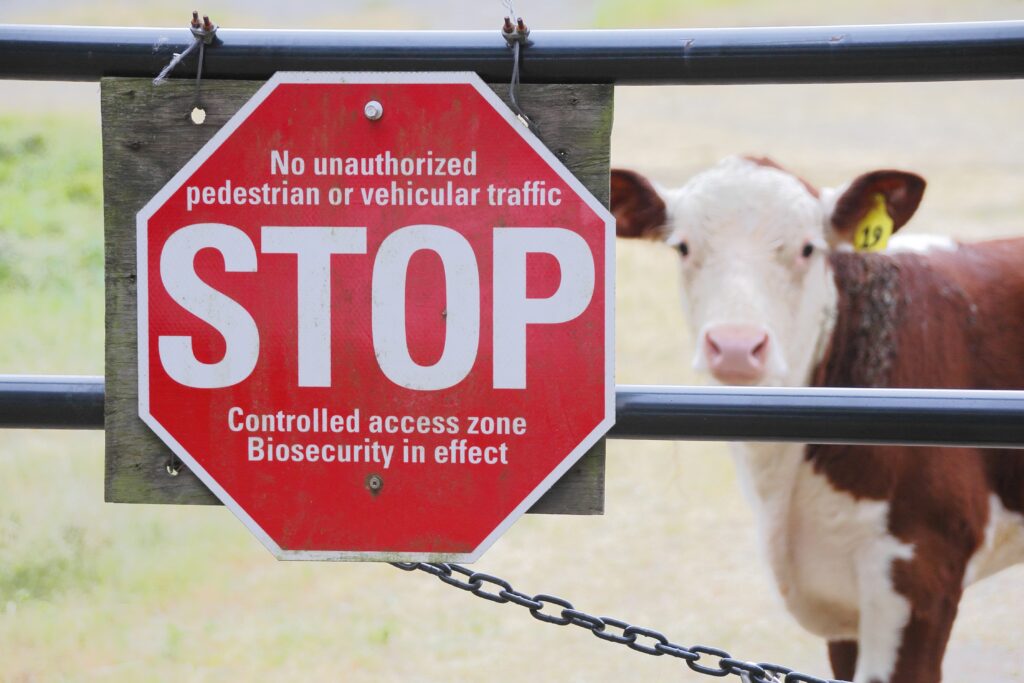
South Africa continues to grapple with sporadic outbreaks of foot-and-mouth disease (FMD), a highly contagious viral infection affecting cloven-hoofed animals, including cattle, sheep, goats, pigs, and buffalo. The stakes are high: Beyond the immediate animal health risks, FMD imposes a crippling economic toll, contributing to estimated losses of around R34.38 billion across Africa by limiting trade in livestock and animal-derived products. To shed light on the national picture, The Vet’s Hub spoke with Dr Emily Mogajane, chief director of Biosecurity Control at the Department of Agriculture, who outlined ongoing containment strategies and key lessons for managing future outbreaks.1,2
Dr Mogajane identified North West and KwaZulu-Natal as the main areas of concern. The spread of the disease in recent years has largely been linked to animal movements through auctions, speculator trading, and informal sales to individuals and abattoirs — routes that complicate biosecurity enforcement.2
Species and transmission dynamics
While FMD affects multiple species, dairy cattle have been most acutely affected, alongside buffalo, which remain the primary wildlife reservoir. Other cloven-hoofed species can become infected but do not typically maintain the virus in the population.2
Drivers of outbreaks
The uncontrolled movement of animals, people, and vehicles — particularly those not properly disinfected — has been a key factor in the continued spread of FMD. Gaps in biosecurity systems have also contributed to local transmission in high-risk areas such as auctions, feedlots, and communal farms.2
Surveillance and early detection
Dr Mogajane noted that active surveillance in Limpopo and the Eastern Cape has been effective, and similar engagement is now being discussed with auction houses to strengthen early detection efforts in other provinces.2
Trade and economic impact
FMD’s impact on South Africa’s international trade has been substantial. “Many countries have imposed bans on animal and animal product exports from affected regions,” Dr Mogajane confirmed, underscoring how FMD status directly shapes export market access, food security and economic stability.2
Vaccination and control measures
While vaccination reduces viral load, it does not prevent infection, meaning strict movement control and quarantine enforcement remain critical tools for outbreak prevention. Dr Mogajane emphasised that in some settings — particularly auctions and communal grazing areas — tighter controls could have limited disease spread.2
Preparedness and lessons learned
Key lessons from recent outbreaks include the need for closer collaboration between government and farmers, and for the implementation of a practical national contingency plan that clearly defines roles and responsibilities during animal disease emergencies.2
“Our national preparedness must improve,” Dr Mogajane concluded, highlighting the importance of proactive planning and shared accountability in protecting South Africa’s livestock sector from future FMD threats.2
Navigating the challenges of FMD containment
One virus, many faces: The challenge of FMD vaccines
Containment of FMD is a complex task, particularly in regions like South Africa where the disease persists sporadically. The diversity and rapid evolution of FMD virus (FMDV) serotypes, frequently undermines vaccine efficacy, as circulating field strains may not match available vaccines.1
Historically, inactivated viral vaccines have been the primary tool to prevent outbreaks, aiming to protect cloven-hoofed animals such as cattle, sheep, goats, and buffalo. However, the virus’s seven serotypes, significant antigenic variability, and short-lived immunity complicate vaccine efficacy, demanding constant adaptation to circulating strains.1
In Africa, the endemic nature of FMD is driven by multiple serotypes, wildlife-livestock interactions, transboundary movements, and gaps in biosecurity. Polyvalent vaccines targeting multiple serotypes are widely used, but their use may inadvertently accelerate viral evolution. Countries must therefore tailor vaccination programmes to local epidemiology, matching vaccine strains to the field strains and ensuring robust immune responses in livestock.1
South Africa illustrates this approach. Alongside a zoning strategy separating FMD-free areas from high-risk regions, vaccination is focused on cattle near wildlife interfaces. Trivalent inactivated vaccines targeting Southern African Territories (SAT) 1, SAT2, and SAT3 serotypes have shown effective seroconversion, with protective immunity lasting up to 12-months when booster doses are administered. The use of oil-based adjuvants, such as incomplete seppic adjuvant 206B, has further enhanced immune responses compared with conventional formulations, offering stronger protection for both cattle and pigs.1
Despite these advances, challenges remain. Vaccine efficacy varies due to the diversity of circulating serotypes, logistical hurdles in vaccine distribution, and operational inconsistencies in vaccination campaigns. Outbreaks in vaccinated herds highlight issues such as incomplete coverage, mismatched vaccine strains, and waning immunity.1
Moreover, economic constraints limit vaccine production and access across the continent, emphasising the need for coordinated and well-resourced control programmes. Meta-analyses indicate that FMD vaccination can reduce infection risk by ~69%, demonstrating its potential to control outbreaks when deployed strategically. Yet, the heterogeneity of vaccine performance underscores the importance of ongoing surveillance, monitoring, and adaptation of vaccination protocols to evolving viral populations.1
Looking ahead, Africa’s FMD control strategy must integrate improved vaccine formulations, broader multivalent coverage, enhanced surveillance, and harmonised efficacy studies. By continuously refining vaccination strategies, combining them with movement control and biosecurity measures, African nations can move closer to reducing FMD prevalence and, ultimately, achieving long-term eradication, according to Wubshet et al.1
Mind the gap: How farmer knowledge shapes FMD control
A recent study by Kiayima et al highlights critical gaps in FMD awareness among communal livestock farmers in South Africa’s FMD zones. Surveying 629 farmers across 44 dip-tanks, the study assessed FMD knowledge using 25 yes/no questions, revealing that while ~66% of farmers were aware of FMD, awareness of key transmission routes and clinical signs was limited.3
Less than 50% could identify lameness or excessive salivation as main symptoms, and only 2.4% recognised that movement of infected animals spreads the virus. Surprisingly, many were unaware that African buffaloes act as reservoirs for FMD.3
The study also identified factors associated with higher FMD knowledge. Farmers with formal education were twice as likely to recognise FMD, while ownership of poultry, larger herd sizes, livestock farming as a primary occupation, and direct supervision during grazing also increased the odds of higher knowledge. Geographically, farmers in Limpopo were four times more likely to have high FMD knowledge than those in Mpumalanga.3
These findings underscore the importance of targeted education, training, and information dissemination for communal farmers. Without improved understanding of FMD transmission and clinical signs, early detection and reporting — critical components of event-based surveillance — remain weak. Strengthening farmer knowledge is essential not only to prevent outbreaks but also to protect livestock health, local economies, and the broader agricultural trade in South Africa, concluded Kiayima et al.3
Veterinarians, eyes wide open: When FMD plays sneaky
A recent Parliamentary Monitoring Group report highlighted a shift in the behaviour of the FMD virus, making clinical diagnosis increasingly difficult. Some animals no longer display classical or any symptoms, complicating early detection at farm level.4
Traditionally, clinical FMD is marked by fever and the appearance of fluid-filled vesicles on non-haired skin, such as the coronary bands, interdigital clefts, oral mucosa, and teats. However, while naïve cattle and pigs often display dramatic lesions, signs can be subtle or absent in animals with prior immunity or in breeds inherently resistant to the virus. Pain-related signs, such as lameness, reluctance to eat, or difficulty standing, also vary across species.3
In cattle, primary FMD virus infection is typically localised to the nasopharynx. Clinically susceptible animals may progress to viremia and overt disease, whereas vaccinated, previously exposed, or resistant cattle often develop neoteric infections, with virus confined to the nasopharynx but shed in oronasal secretions. Following infection, cattle either fully clear the virus or maintain a subclinical, persistent infection in the upper respiratory tract, known as the FMD virus carrier state.3
Sheep are infected primarily via the respiratory tract, with disease severity highly variable. Subclinical neoteric infections are common, and infected animals may either clear the virus or become carriers, in which FMD virus persists in the epithelial crypts of the oropharyngeal tonsils.3
Pigs are mainly infected through oral exposure, with the oropharynx as the primary site. Clinical disease is often severe, and infected pigs shed large amounts of virus. Unlike ruminants, pigs efficiently clear the infection following the clinical phase and do not develop a carrier state.3
African buffalo are largely resistant to clinical disease, though experimental infections have occasionally induced fever and subtle oral lesions. Overall, the severity and visibility of clinical signs depend on virus strain, host genetics, and immune status, with lesions typically resolving within seven to ten days.3
FMD can also manifest atypically. Fatal myocarditis, particularly in juvenile animals, occurs with rapid progression and may cause death without prior visible FMD symptoms or signs of heart failure. Lesions, when present, appear as pale areas on the myocardial surface, extending into the myocardium, accompanied histologically by mononuclear infiltration, edema, and cardiomyocyte necrosis. Immunohistological staining confirms viral presence, but myocarditis diagnosis requires identification of gross or histological lesions. FMD has also been sporadically associated with abortion or fetal death in cattle and sheep, likely influenced by gestational timing, viral strain, and host genetics.3
Adding further complexity, the virus can cause subclinical infections. Early-phase neoteric infections, often in animals with acquired immunity from prior exposure or vaccination, can involve substantial virus shedding despite the absence of symptoms. Post-acute persistent infections, mainly in ruminants, generally do not involve shedding but create FMDV carriers that complicate long-term control.3
These evolving clinical patterns underscore the challenge of detecting and controlling FMD. The subtle or absent symptoms in certain animals, the occurrence of atypical manifestations, and the presence of subclinical carriers all highlight the need for vigilant surveillance, improved diagnostic awareness among veterinarians, and tailored disease management strategies to prevent unnoticed spread at both farm and regional levels.3,4
Conclusion
South Africa continues to face sporadic FMD outbreaks, driven by complex interactions between viral evolution, animal movement, and gaps in biosecurity. The changing clinical presentation — ranging from dramatic vesicular lesions to completely asymptomatic infections — complicates early detection, while subclinical and carrier animals perpetuate viral persistence. Vaccination, although essential, is challenged by multiple serotypes, antigenic variation, and logistical constraints, highlighting the need for targeted, locally adapted vaccination strategies. Effective control relies on integrated measures, including rigorous movement control, surveillance, farmer education, and coordinated outbreak response. Strengthening collaboration between government authorities and farmers, combined with proactive contingency planning, is crucial to reduce transmission, protect livestock health, and safeguard trade.
Practice Pearls
- Maintain high suspicion for FMD, even in animals lacking classical lesions.
- Prioritise nasopharyngeal sampling in cattle and sheep for early detection.
- Reinforce biosecurity at auctions, communal grazing, and transport hubs.
- Advise farmers on vaccination timing, boosters, and matching vaccine strains.
- Educate communities on FMD signs, transmission routes, and reporting protocols.
References
- Wubshet AK, Werid GM, Teklue T, et al. Foot and mouth disease vaccine efficacy in Africa: a systematic review and meta-analysis. Front Vet Sci, 2024.
- Professional communication. Dr Emily Mogajane. [Email]. 6 October 2025.
- Kiayima KD, Etter E, Chaminuka P, et al. Assessment of communal farmers’ knowledge of foot-and-mouth disease (FMD) within the FMD protection zone with vaccination of Limpopo and Mpumalanga Provinces, South Africa. Preventive Veterinary Medicine, 2025.
- Stenfeldt C, Eschbaumer M, Humphreys J, et al.The pathogenesis of foot-and-mouth disease virus: current understandings and knowledge gaps. Vet Res, 2025.
- Parliamentary Monitoring Group. Foot-and-mouth disease update & interventions; WC Oversight Report (with Minister). May 2025 [Internet]. Available at: https://pmg.org.za/committee-meeting/40633/#:~:text=DoA%20aims%20to%20allocate%20Animal,in%20South%20Africa%20without%20permission.