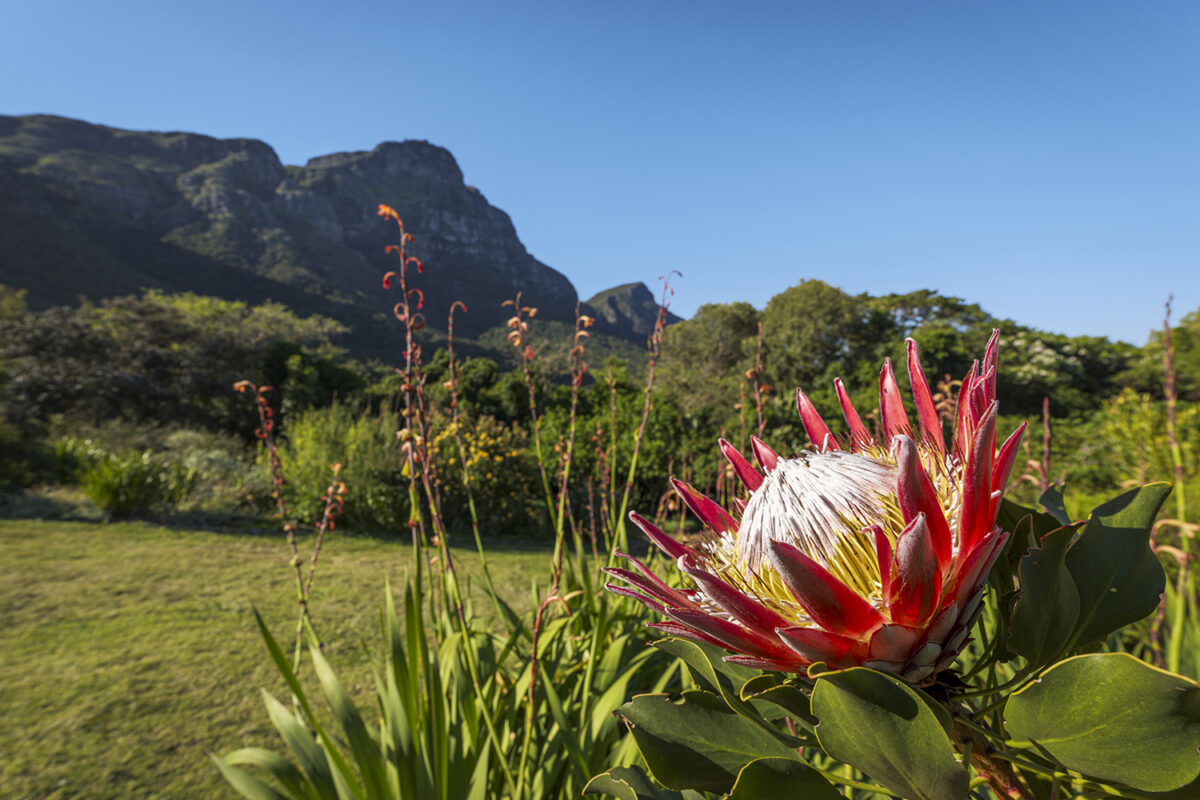
South Africa’s draft National Biodiversity Strategy and Action Plan (NBSAP) 2026–2035 places farms, livelihoods and natural heritage at the centre of conservation. With nearly half of ecosystem types threatened and water security dependent on functioning catchments, the plan calls for action beyond protected areas — from agriculture and water management to pollution control and climate resilience.
South Africa’s biodiversity is not a luxury reserved for national parks. It is living infrastructure behind productive land, reliable water, food, jobs and rural livelihoods. The country is one of the world’s megadiverse nations, contains three of the 36 global biodiversity hotspots and has almost 1000 distinct ecosystem types across terrestrial, freshwater, estuarine and marine environments.
More than 20 000 indigenous plant species occur here, with 60.5% found nowhere else on Earth. The country has identified 263 terrestrial Key Biodiversity Areas, while its 3 000 km coastline links rocky shores, beaches, estuaries, kelp forests, coral reefs and deep-sea habitats. More than 13 000 marine species have been recorded. Around 290 functional estuaries support diverse life and help protect coastal communities from extreme weather. South Africa now has 32 Ramsar sites (important wetlands protected under an international treaty).
This natural wealth is working wealth. Indigenous plants and harvested marine species contribute to food and livelihoods. Savannas and grasslands support rangelands and crop agriculture, while strategic water source areas provide 50% of the nation’s water from only 10% of its land area.
The draft National Biodiversity Strategy and Action Plan (NBSAP) 2026–2035 therefore matters well beyond the conservation sector. It is South Africa’s third NBSAP and its latest vehicle for meeting responsibilities under the Convention on Biological Diversity (CBD), ratified in 1995. Its question is practical: How can South Africa conserve the systems on which people depend while sharing biodiversity’s benefits fairly?
The warning from the 2025 assessment
The National Biodiversity Assessment 2025 provides a clear picture of the country’s ecological condition. Almost half (48%) of South Africa’s ecosystem types are threatened. Estuaries, rivers and wetlands are the most threatened and least protected, a serious concern in a country where water security is inseparable from functioning catchments and wetlands. Around 16% of assessed plant species and 10% of assessed animal species are threatened. Freshwater fish face especially high risk (66%), as do cartilaginous fish (42%).
The assessment also introduces a genetic warning: 58% of assessed populations are below the effective size required for long-term genetic health. A population with too little genetic diversity is less able to withstand disease, drought or changing conditions. For agriculture, this is a reminder of the value of indigenous genetic resources, crop wild relatives, landraces and locally adapted livestock systems.
Protected areas have expanded. In 2025, protected and conserved areas covered ~17% of South Africa’s terrestrial area and 15% of its marine territory. Biodiversity stewardship was central to meeting and exceeding terrestrial protected-area targets by 2020, showing what can be achieved when private and communal landholders are partners in conservation. Yet rivers and wetlands remain poorly protected, and a percentage on a map does not by itself guarantee ecological health.
The pressures are familiar to farmers and rural communities. Land conversion for croplands, grazing, plantation forestry, settlements and mining removes habitat. Overgrazing reduces vegetation cover, accelerates soil erosion and sends damaging effects downstream. Dams, abstraction and altered river flows affect estuaries.
Invasive alien plants consume water and increase fuel loads, while non-native predatory fish disrupt rivers. Acid mine drainage, industrial and urban effluent, agricultural return flows and stormwater runoff further degrade aquatic environments.
These are not separate problems. Degraded soil means less productive grazing and greater vulnerability to drought. A damaged wetland stores and filters less water, while a cleared or invaded catchment can increase flood risk and reduce dry-season flows. Declining ecosystem resilience eventually becomes a direct cost to farming, livestock production, households and local economies.
What the previous plans teach us
South Africa’s first NBSAP, published in 2005, was built on the National Spatial Biodiversity Assessment of 2004. Of its 122 activities, 54% were fully or substantially achieved. It strengthened institutional coordination and contributed to provincial spatial biodiversity plans and the first National Biodiversity Framework. But it also showed that mainstreaming biodiversity into other sectors takes longer than expected and depends on opportunities outside the direct control of the biodiversity sector.
The second NBSAP, covering 2015–2025, delivered significant gains. Terrestrial protected-area targets were met or exceeded by 2020, largely through biodiversity stewardship, and marine protection increased dramatically from less than 0.5% to 5.4%. Technical capacity also improved, including an integrated national ecosystem map and natural-capital accounting for protected areas and strategic water source areas.
Progress was uneven. Only five of 22 strategic outcomes were fully achieved – 14 remained in progress and three had unknown status, largely because monitoring was lacking. Although nominal expenditure increased, inflation reduced its real purchasing power.
The lesson is to set achievable outcomes, assign responsibility, publish progress and measure whether conditions improve — not merely whether activities were listed.
A plan for ‘Thriving People and Nature’
The 2026-2036 draft NBSAP adopts the vision of the White Paper on the Conservation and Sustainable Use of South Africa’s Biodiversity: An inclusive, transformed society living in harmony with nature, where biodiversity conservation and sustainable use ensure healthy ecosystems, with improved benefits that are fairly and equitably shared for present and future generations.
Its impact is expressed simply as ‘Thriving People and Nature’. The strategy aligns with the Kunming–Montreal Global Biodiversity Framework adopted by CBD Parties in 2022, while reflecting South Africa’s water scarcity, land degradation, rural poverty, diverse farming sector and need for transformation.
The action plan is organised into 12 thematic areas: Mainstreaming, restoration and invasive alien species, ecosystem and species conservation, human–wildlife coexistence, sustainable use and the biodiversity economy, pollution and waste, ecological infrastructure and climate resilience, access and benefit sharing, biosafety and biotechnology, means of implementation, and knowledge, participation and inclusion.
This recognises that conservation cannot be delivered by protected areas alone. Biodiversity must influence spatial planning, agriculture, water management, mining, infrastructure, urban development and private-sector decisions, supported by restoration, compliance, finance, research and meaningful participation.
From pressure to practical response
The plan’s response to habitat loss includes biodiversity-inclusive spatial planning and better management of protected areas. Restoration is an ecological and livelihood opportunity. Rangeland initiatives promoting rotational grazing, native vegetation recovery and community governance offer a model for livestock areas.
Invasive alien species management is paired with restoration rather than treated as a once-off clearing exercise. Priority catchments and strategic water source areas can benefit twice: Habitat recovers, while water security and climate resilience improve. The plan also links ecological infrastructure to ecosystem-based adaptation and nature-based solutions. Healthy wetlands, rivers and riparian zones regulate water flows, buffer floods and droughts, protect infrastructure and sustain livelihoods.
Pollution has its own thematic area for the first time. That is significant because agricultural nutrient runoff, pesticides, failing wastewater systems, mining legacies and illegal dumping cannot be solved by conservation agencies working in isolation. The draft calls for stronger baselines, accountability, compliance monitoring, enforcement and remediation of contaminated sites.
Farmers are part of this solution through responsible soil, nutrient and water management, but they also need reliable municipal services and fair, consistent regulation upstream and downstream.
Climate change increases urgency. Prolonged drought in the arid west contributes to species declines, while extreme weather affects coastal and estuarine systems.
Climate change also amplifies other pressures by interacting with invasive species, altered fire regimes and habitat degradation. Maintaining connected, functioning ecosystems is therefore a form of risk management for agriculture and rural communities, not an alternative to development.
The marine evidence is equally sobering.
The number of species evaluated in South Africa’s marine fishery resources report grew from 22 in 2008 to 65 in 2025, reflecting improved monitoring. Yet depleted or heavily depleted stocks accounted for 31% of monitored resources in 2025. Sustainable use, science-based management, bycatch reduction and support for customary and small-scale fishers are essential if coastal livelihoods are to endure.
Growing the biodiversity economy fairly
South Africa already has a substantial biodiversity economy. Biodiversity-based tourism contributed R27.7 billion in direct GDP and supported more than 90 000 positions in 2019. The wider biodiversity economy includes fishing, aquaculture, ecotourism, hunting, harvesting, hiking and cultural uses. Traditional medicines and indigenous products connect natural resources to rural enterprises and livelihoods.
The draft plan places sustainable use at the centre of this opportunity. Its intention is not to extract more until resources are depleted, but to build legal, well-regulated and inclusive value chains. Enterprise development should create space for rural communities and designated groups, while better permitting, traceability, compliance and enforcement protect the biological foundation of the economy. When people receive meaningful benefits from well-managed biodiversity, they have a stronger stake in protecting it.
Access and benefit sharing is particularly important for farmers, communities and traditional knowledge holders. The plan proposes stronger systems for sharing monetary and non-monetary benefits arising from genetic resources and associated knowledge. It also recognises the importance of securing indigenous genetic resources, crop wild relatives and domestic landraces in gene banks and community seed banks — an investment in future food security as much as in conservation.
Implementation will decide the outcome
The largest risk is that the third NBSAP becomes another statement of good intentions. Biodiversity investment remains heavily dependent on the public sector and accounts for less than 1% of the consolidated government budget. Nominal expenditure rose from R15.25 billion in 2016 to R20.14 billion in 2024, but real purchasing power fell from R14.31 billion to R12.9 billion. The draft calls for domestic resources, international climate finance and private-sector contributions, with an access goal of $8 billion annually and greater use of innovative finance.
It also proposes outcome-oriented indicators aligned with the Kunming-Montreal Global Biodiversity Framework. This means asking whether ecosystems are recovering, extinction risk is falling, water-related ecological infrastructure is functioning, resource use is sustainable and benefits are reaching rights holders. Monitoring must be regular, public and useful to decision-makers.
For South Africa’s farmers, livestock producers and rural communities, the stakes are concrete: soil that stays on the land, water that remains available, rangelands that recover, fisheries that support families and biodiversity-based enterprises that share value fairly. The draft NBSAP’s strongest idea is that these outcomes are connected. Thriving nature is the foundation that allows people, farms and rural economies to thrive.
Reference
Department of Forestry, Fishery and the Environment. South Africa National Biodiversity Strategy and Action Plan 2026-2035. 2026 [Internet]. Available at: https://www.dffe.gov.za/sites/default/files/docs/strategy.framework/biodiversity/draft.nbsap202636.pdf